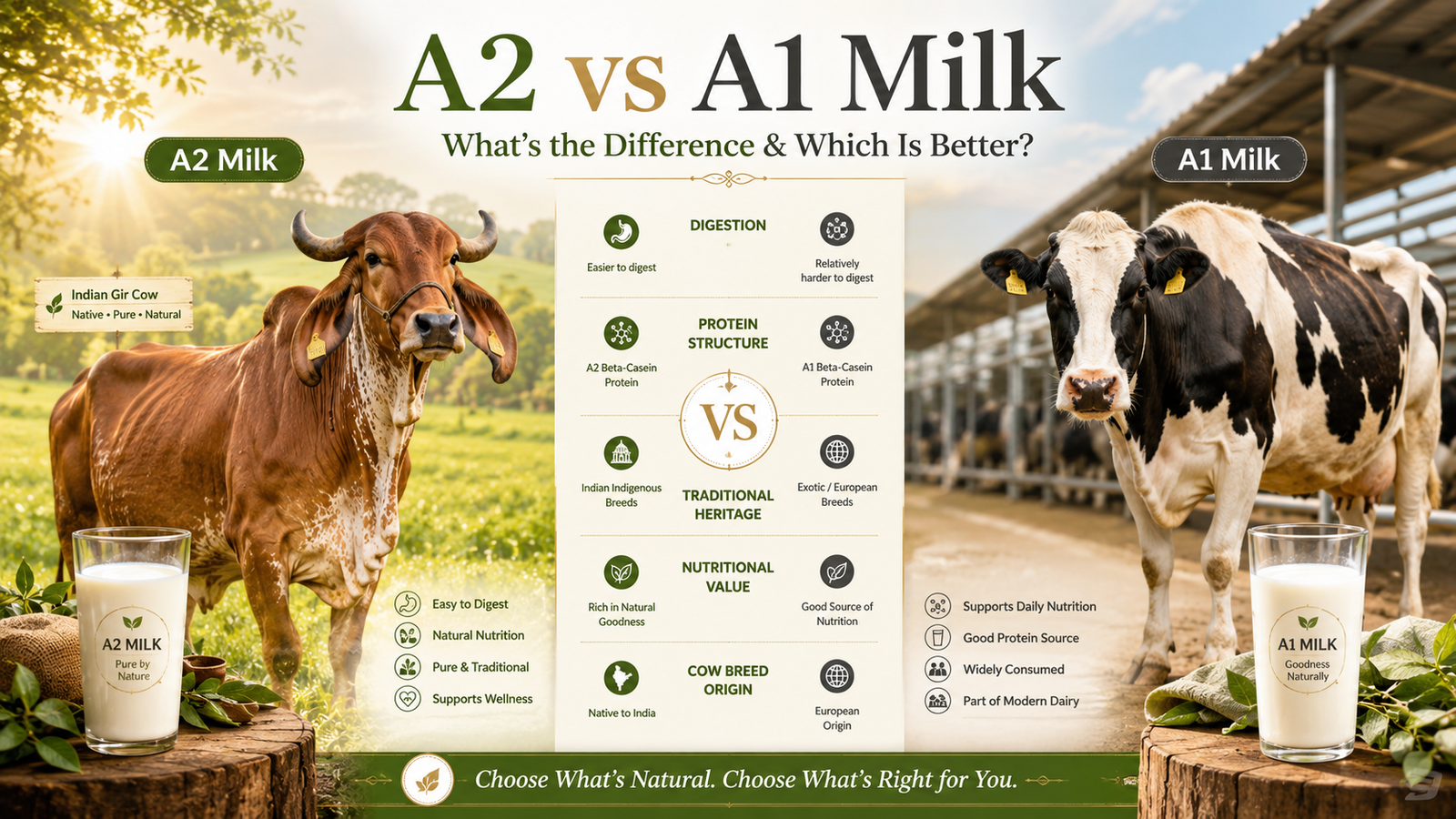
Learn the difference between A1 and A2 milk, their health benefits, digestion impact, and why many people prefer A2 milk from Gir cows. Complete guide by Unnati Organic.
Milk has been an essential part of Indian diets for centuries, providing protein, calcium, vitamins, and healthy fats. However, in recent years, there has been growing discussion about two types of milk proteins: A1 milk and A2 milk.
Many health-conscious consumers are switching to A2 milk and A2 ghee, but what exactly makes them different? Is A2 milk really better than A1 milk? And why are traditional Indian cow breeds such as Gir cows often associated with A2 milk?
In this guide, we will explore the science, benefits, and differences between A1 and A2 milk to help you make an informed choice.
What Is A1 Milk?
A1 milk comes from many modern dairy cow breeds, including:
- Holstein Friesian
- Jersey (mixed genetics)
- Ayrshire
- British Shorthorn
A1 milk contains a protein called beta-casein A1.
Milk naturally contains various proteins, and beta-casein accounts for approximately 30% of the total protein content. The A1 variant developed due to a genetic mutation in certain European cattle breeds thousands of years ago.
Today, most commercially available milk in many countries contains a mixture of A1 and A2 proteins.
What Is A2 Milk?
A2 milk contains only the A2 beta-casein protein and does not contain the A1 variant.
Traditional Indian cow breeds naturally produce A2 milk, including:
- Gir Cow
- Sahiwal Cow
- Red Sindhi Cow
- Tharparkar Cow
A2 milk is considered closer to the milk consumed by humans for thousands of years before genetic variations introduced the A1 protein.
Because of its natural composition, many people report better digestion and comfort when consuming A2 milk.
The Scientific Difference Between A1 and A2 Milk
The difference between A1 and A2 milk comes down to a single amino acid in the beta-casein protein.
A1 Beta-Casein
Contains Histidine at position 67.
A2 Beta-Casein
Contains Proline at position 67.
While this may seem like a small difference, it affects how the protein breaks down during digestion.
When A1 milk is digested, it may release a peptide called:
Beta-Casomorphin-7 (BCM-7)
Researchers have studied BCM-7 extensively because it may influence digestive comfort in some individuals.
A2 milk generally produces little or no BCM-7 during digestion.
Why Do Some People Prefer A2 Milk?
Many consumers choose A2 milk because they experience:
Better Digestion
Some individuals who feel discomfort after drinking regular milk report fewer digestive issues with A2 milk.
Reduced Bloating
A2 milk is often associated with improved digestive comfort.
Easier on the Stomach
People who believe they are lactose intolerant sometimes discover that their discomfort may actually be related to the protein composition of milk rather than lactose itself.
Traditional and Natural Choice
A2 milk comes from indigenous Indian cow breeds that have been part of Indian agriculture for centuries.
A1 Milk vs A2 Milk: Comparison Table
| Feature | A1 Milk | A2 Milk |
|---|---|---|
| Protein Type | A1 Beta-Casein | A2 Beta-Casein |
| Source | Mostly European Breeds | Indigenous Indian Breeds |
| BCM-7 Production | Yes | Minimal or None |
| Digestion Comfort | May vary | Often easier for many people |
| Traditional Indian Cow Breeds | No | Yes |
| Consumer Preference | Commercial Dairy | Health-Conscious Consumers |
Is A2 Milk More Nutritious?
Both A1 and A2 milk provide:
- Protein
- Calcium
- Phosphorus
- Vitamin B12
- Potassium
- Healthy fats
The nutritional values are largely similar.
The primary difference lies in how the protein is digested and tolerated by different individuals.
Why Are Gir Cows Famous for A2 Milk?
Gir cows are among India’s most respected indigenous cattle breeds.
Known for:
- Strong immunity
- Adaptability
- High-quality A2 milk production
The milk from Gir cows is widely used to prepare:
- A2 Milk
- Bilona Ghee
- Traditional Dairy Products
Many premium dairy brands choose Gir cow milk because of its purity and traditional nutritional value.
A2 Milk and A2 Gir Cow Ghee
The quality of ghee depends heavily on the quality of milk used.
When A2 milk from Gir cows is converted into traditional Bilona Ghee, it retains the nutritional richness associated with indigenous cow milk.
Benefits often associated with A2 Gir Cow Ghee include:
- Rich aroma and taste
- Traditional preparation method
- Naturally occurring vitamins
- Healthy fats
This makes it a preferred choice for families seeking authentic and traditionally prepared ghee.
Who Should Consider A2 Milk?
A2 milk may be suitable for:
- Health-conscious families
- Individuals seeking traditional dairy products
- People looking for naturally sourced milk
- Consumers preferring indigenous cow breeds
However, people with diagnosed milk allergies should consult a healthcare professional before making dietary changes.
-
Is A2 milk lactose-free?
No. A2 milk still contains lactose. The difference lies in the beta-casein protein.
-
Is A2 milk better than A1 milk?
Both provide similar nutrition, but many people find A2 milk easier to digest.
-
Which Indian cows produce A2 milk?
Gir, Sahiwal, Red Sindhi, and Tharparkar cows are among the breeds that naturally produce A2 milk.
-
Why is A2 milk more expensive?
A2 milk is often sourced from indigenous cow breeds maintained through traditional farming practices, which can increase production costs.
-
Is A2 ghee made from A2 milk?
Yes. Authentic A2 Gir Cow Ghee is prepared using milk from A2-producing Gir cows
Conclusion
The debate between A1 and A2 milk continues to attract attention among nutrition experts and consumers alike. While both types of milk provide essential nutrients, A2 milk from indigenous Indian cow breeds such as Gir cows is increasingly preferred for its traditional roots and perceived digestive comfort.
For families seeking authentic dairy products, choosing A2 Gir Cow Ghee made using the traditional Bilona method can be a meaningful step toward embracing India’s rich dairy heritage.
